

How We Measure
Our research and demonstration at Sustainable Settings is at the intersection of science and our intuitive experience. We focus our research on optimum soil health, plant and animal health, food quality, and human health.
We have monitored our soils in our pastures and gardens with Haney and PLFA soil tests. A Haney soil test measures soil health by evaluating microbial activity, organic carbon, and nutrient availability, giving a more dynamic picture of how soil functions as a living system. A PLFA (Phospholipid Fatty Acid) test analyzes the composition of soil microbial communities, helping us understand the balance and diversity of organisms that drive nutrient cycling and plant health.
We have gathered soil data from our pastures for the last 12 years, which you can see in the charts below.
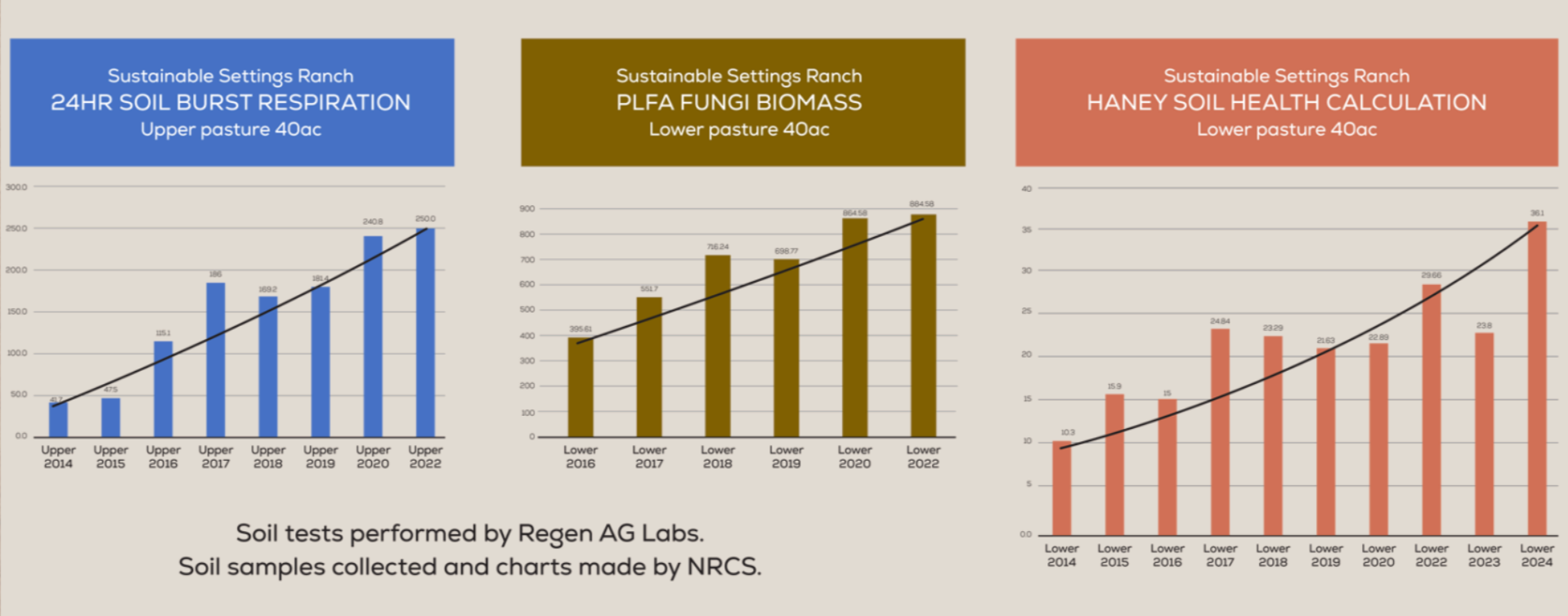
“Sustainable Settings’ soil data is in the upper 1% of the over 140,000 tests we have run as to gains in soil health. Their nine years of soil data from scientific lab tests conducted by Regen AG Labs demonstrate upward trending data showing consistent gains each year in all of the 40-different forms of life metrics that we measure. This is rock solid data, clear strong evidence that Sustainable Settings’ combined Biodynamic and regenerative management strategies are effective. This is really awesome data, and is demonstrating what is possible in our effort to heal the land.”
"After their decades as artists Brook and Rose LeVan founded Sustainable Settings to see if they could heal the land. They do not have degrees in soil science or conventional agriculture of any kind to get over. Their creativity and openness to run trials and try new things is why they have done so well in regenerating soil health. That is why they are making progress. People may hear of their practices and say that it is just academic or anecdotal evidence. Well, no it is not. They have ten years of rock solid upward trending soil health gains demonstrating that their combined biodynamic and regenerative management practices are definitely working."
“Here’s my take on it. The soil is talking to us, telling us, trying to communicate with us, what is going on. There are triggers in the soil. I am convinced there are certain chemical triggers in the soil that connect plants and microbes, that they communicate and that things can happen quickly when the right things come together. And what Sustainable Settings has accomplished in the last decade with their combined biodynamic and regenerative land management, that is demonstrated in their ten years of soil data, is proof of it.”
Praise from Rick Haney, Soil Chemist/Microbiologist and Research Farmer at the USDA-ARS Grassland Soil and Water Research Laboratory in Temple, TX and creator of the Haney Soil Health Test. Currently Rick is Lead Scientist and Soil Data Analyst for Regen AG Lab in Pleasanton, NE
Biodynamic and Regenerative Stewardship
Since 2003, Sustainable Settings has revitalized this ranch land from industrial, chemical, extractive agricultural abuse with over-grazed compacted soils to a living tilth with upward trending scientific soil test data confirming that this Biodynamic methodology works. In the pastures we created deep narrow trenches along keylines with the Yeoman’s Keyline plow to build beneficial infrastructure to stimulate the herd underground. We’ve also reseeded diverse forage species with a no-till drill to build polyculture pastures that mimic mountain meadows, verses the conventional approach hay crop, tilling and planting a limited species. We then return our composted manures and leaf matter to the fields to sequester the carbon, nitrogen and other nutrients. Rotating our dairy herd on 1-2 day paddocks of fresh pasture we optimize the rich fertility they bring to the process. Keylining, rotational grazing, no-till methods, are just some of the regenerative strategies we utilize in building soil health.
By mimicking Nature, for instance watching the cows on pasture we merge again the sciences and arts to develop methods that co-create optimum benefits for all the collaborators in the system. In our shift of intention we have found a much more responsive interaction in our stewardship. This shift, combined with good sound biodynamic, organic and regenerative methodology, has encouraged the Soil Food Web of major and minor decomposers to spring to life in optimum performance generating a dynamic response across the whole ranch organism.
Peak Flavor Profiles
By honoring All of the Life within Nature’s economy we gain in quality. This generates peak flavor and intensified nutrient density in our food and potency in our medicinal herbs that revitalize our health and recharge our immune systems. This can only come from the intimacy of our relationships with the life in the land.
We also rely on the testimonies of customers, Michelin starred chefs, and our community to provide us with empirical data on the quality of food and consequently the efficacy of our stewardship practices.
“… you guys beat old Blue Hill in our raw milk blind taste test… Thanks for schooling us. Please come speak to our farmers and staff and have a bite at Stone Barn.”
— Dan Barber of Blue Hill Stone Barn, NY
“Sustainable Settings’ lamb and other food tastes better because it is better for the land and the planet.
This shining example of land stewardship, experiential education, and whole-system thinking and action is a wonderful asset to our community.”
– Amory B Lovins
Cofounder, Chairman & Chief Scientist, Rocky Mountain Institute, Old Snowmass, Colorado
“… the flavor profile of your product is untouchable…”
— Barclay Dodge of BOSQ, Aspen, CO
Frontiers Of Our Research
We are deeply encouraged by what we’ve observed over the past two decades and see a compelling future at the frontiers of our research. Our work points toward diversified polyculture systems, at meaningful scale, as a viable path to restoring degraded soils and rebuilding nutrient density.
We are actively designing and implementing integrated landscapes that bring together animals, perennial crops, annual vegetables, and medicinal plants within silvopasture and alley-cropping systems. By weaving these elements into our pastures, we are exploring how food production, ecosystem health, and economic resilience can function as a unified whole.
Our land is becoming a living training ground, demonstrating how to grow nutrient-dense food while cultivating human health and community vitality.
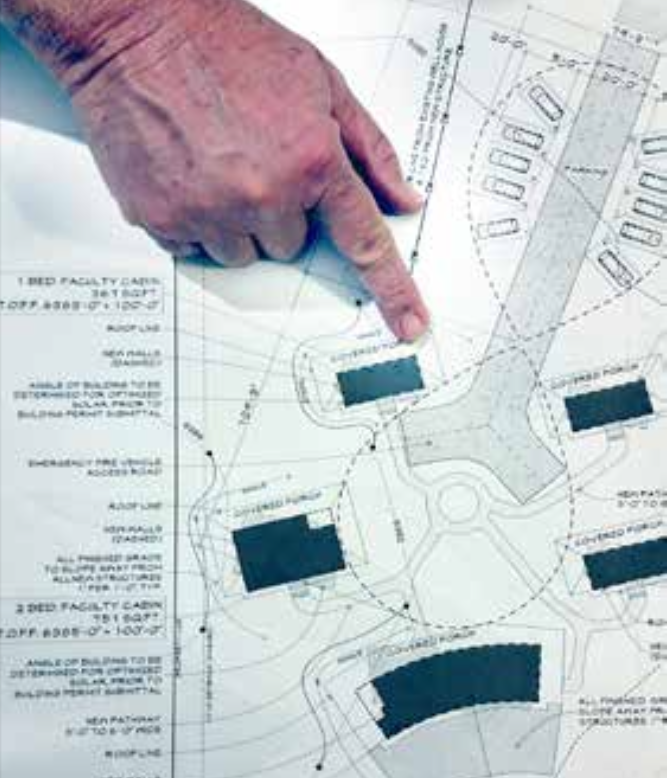
In parallel, we are investigating the role of sacred architecture and geometric design in our built environment. Early results, particularly in root crop storage, suggest measurable improvements in both longevity and quality. These findings are shaping the next generation of our agricultural and residential structures as we continue to refine the relationship between form, function, and life.
“As the hills of statistics go up, up, up on soil erosion, climate change, fossil fuel use, chemical contamination and more it becomes increasingly obvious that we will need one day the good examples from such marginal places as Sustainable Settings as a hedge on our cultural bet. And oh, by the way, they produce better quality food.”
– Wes Jackson, President,
The Land Institute, Salina, Kansas
Contact us
Interested in working together? Fill out some info and we will be in touch shortly. We can’t wait to hear from you!